What If Earth Suddenly Stopped Spinning?
October 6, 2026 · 4 min read
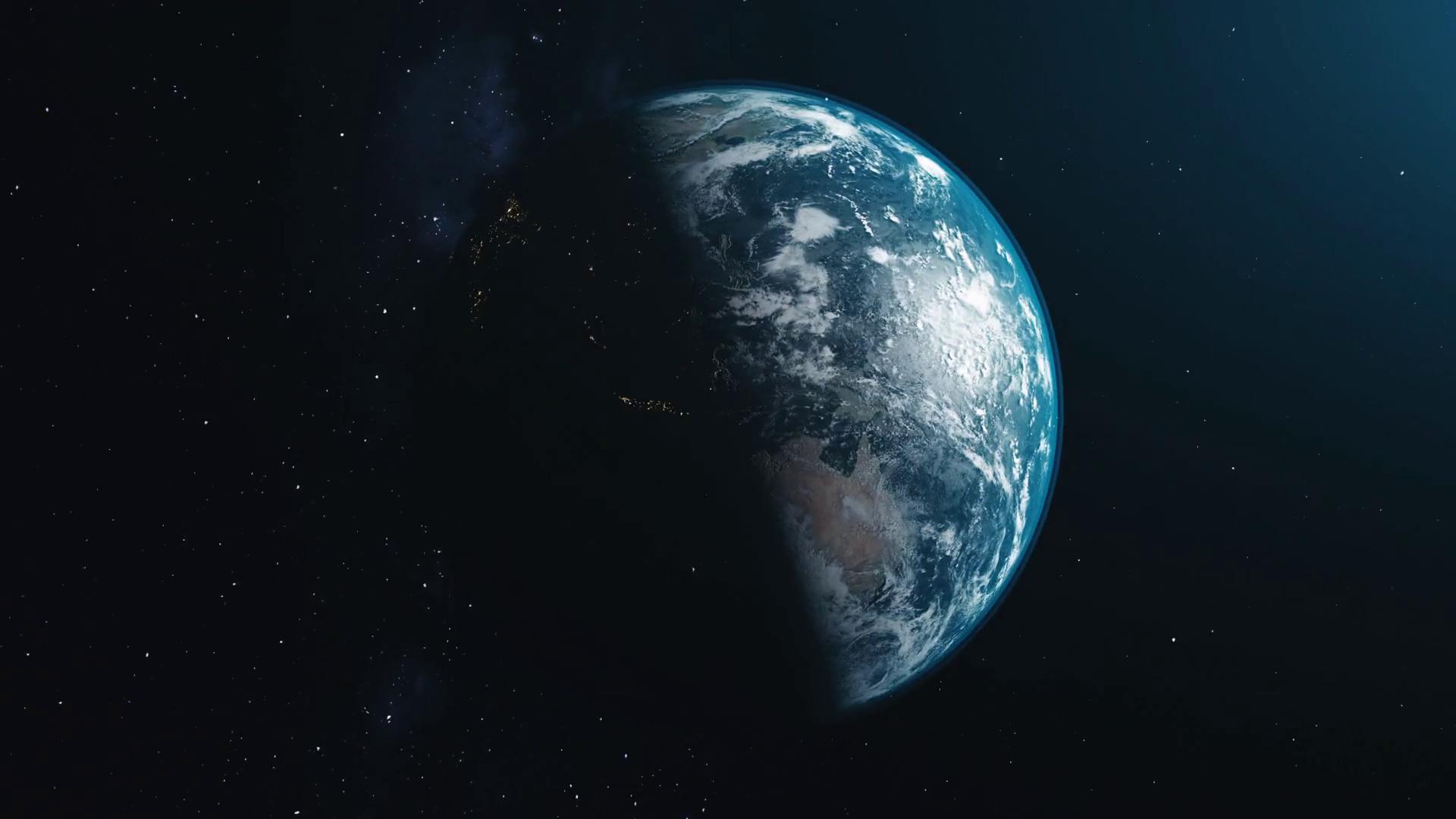
Right now, as you read this, you are moving at more than 1,000 kilometres per hour.
You don't feel it.
Your coffee doesn't spill. Your chair doesn't shake. The trees outside aren't being ripped apart by the wind.
That's because you—and almost everything around you—are moving together with the spinning Earth.
But imagine, for just a moment, that Earth suddenly stopped.
Not slowly.
Not over thousands or millions of years.
Instantly.
What would happen?
The answer is far more terrifying—and fascinating—than most of us imagine.
🌍 The moment Earth stops
Earth rotates once approximately every 24 hours.
At the equator, that rotation gives the surface a speed of roughly 1,670 kilometres per hour.
And you are already travelling at that speed.
The reason you don't notice is simple: everything around you is travelling with you.
Now imagine Earth suddenly hits the brakes.
The ground stops.
But you don't.
Neither does the atmosphere.
Neither do the oceans.
Neither does anything that isn't firmly attached to the planet's surface.
Because of inertia, everything would continue moving in the direction Earth had been rotating.
At the equator, that means an eastward motion of roughly 1,670 km/h.
In other words, the planet would stop beneath you—but you would keep going.
And you wouldn't be alone.
💨 The atmosphere becomes a weapon
The air surrounding us is also rotating with Earth.
If the ground suddenly stopped while the atmosphere continued moving, the result would be unimaginable winds.
We're talking about air moving at speeds comparable to a jet aircraft.
Buildings, forests, vehicles and infrastructure would be destroyed almost instantly.
The atmosphere would effectively become a global-scale storm.
And this wouldn't be an ordinary hurricane.
It would be something Earth has never experienced during human civilization.
🌊 Then come the oceans
The oceans have inertia too.
They wouldn't politely stop because the ocean floor had stopped moving.
Water would continue surging across the planet.
Imagine the largest tsunami you've ever seen—and then imagine something vastly larger, travelling across entire regions.
Coastal areas would be devastated.
Water could sweep deep into continents, reshaping coastlines and landscapes.
The familiar map of Earth would begin to change.
🌎 Earth itself would change shape
Here's something most people don't realize:
Earth isn't a perfect sphere.
Its rotation causes the planet to bulge slightly around the equator.
Without rotation, that effect would disappear.
Over a long period, Earth would gradually become more spherical.
And the oceans would respond.
Water would redistribute toward the poles, dramatically changing where Earth's seas and continents meet.
The planet we know from maps and photographs would slowly become something different.
☀️ Then comes the strangest part
Suppose you somehow survived the initial catastrophe.
There would be another enormous problem.
Earth wouldn't stop orbiting the Sun.
It would simply stop rotating.
That means a normal 24-hour day would disappear.
Instead, depending on the exact scenario, a location could experience something resembling months of daylight followed by months of darkness.
Imagine the Sun rising…
and then remaining in the sky for months.
Temperatures would become extreme.
Then the Sun would finally disappear below the horizon.
And darkness would last for months.
The oceans and atmosphere would redistribute heat and soften the extremes, but Earth's climate would become radically different from the one we know.
🧲 Would Earth lose its magnetic field?
Not instantly.
This is another common misconception.
Earth's magnetic field isn't simply produced because the planet spins like a giant bar magnet.
It is primarily generated by the movement of electrically conducting molten metal inside Earth's outer core.
So stopping the planet's rotation wouldn't automatically switch off the magnetic field.
Earth would still have a magnetic shield—at least initially.
But here's the most important distinction
There is a huge difference between Earth suddenly stopping and Earth gradually slowing down.
If Earth's rotation somehow slowed over millions of years, life would have time to adapt.
Evolution would have time to respond.
Climate systems would gradually change.
But if Earth stopped tomorrow?
There would be no time to adapt.
The atmosphere and oceans would continue moving.
The surface would experience enormous forces.
The climate would eventually transform.
And civilization, as we know it, would almost certainly not survive.
The Earth beneath your feet is moving
Perhaps the strangest thing about this thought experiment isn't what would happen if Earth stopped.
It's what is happening right now.
You are sitting still.
At least, it feels that way.
But Earth is spinning beneath you.
It is carrying you through space at hundreds or thousands of kilometres per hour, depending on where you are on the planet.
At the same time, Earth is orbiting the Sun.
And the Sun itself is travelling through the Milky Way.
So you are not really sitting still at all.
You are a passenger on a planet travelling through an enormous universe—and somehow, it feels like an ordinary Tuesday.
Maybe that's one of the most remarkable things about living on Earth.
We don't notice how extraordinary our planet is because we experience its miracles every single day.
The spinning.
The atmosphere.
The oceans.
The magnetic field.
The sunlight.
The gravity.
All of it feels normal.
Until you stop and ask one simple question:
“What if it suddenly stopped?”
And suddenly, the quiet world beneath your feet doesn't seem so quiet anymore.